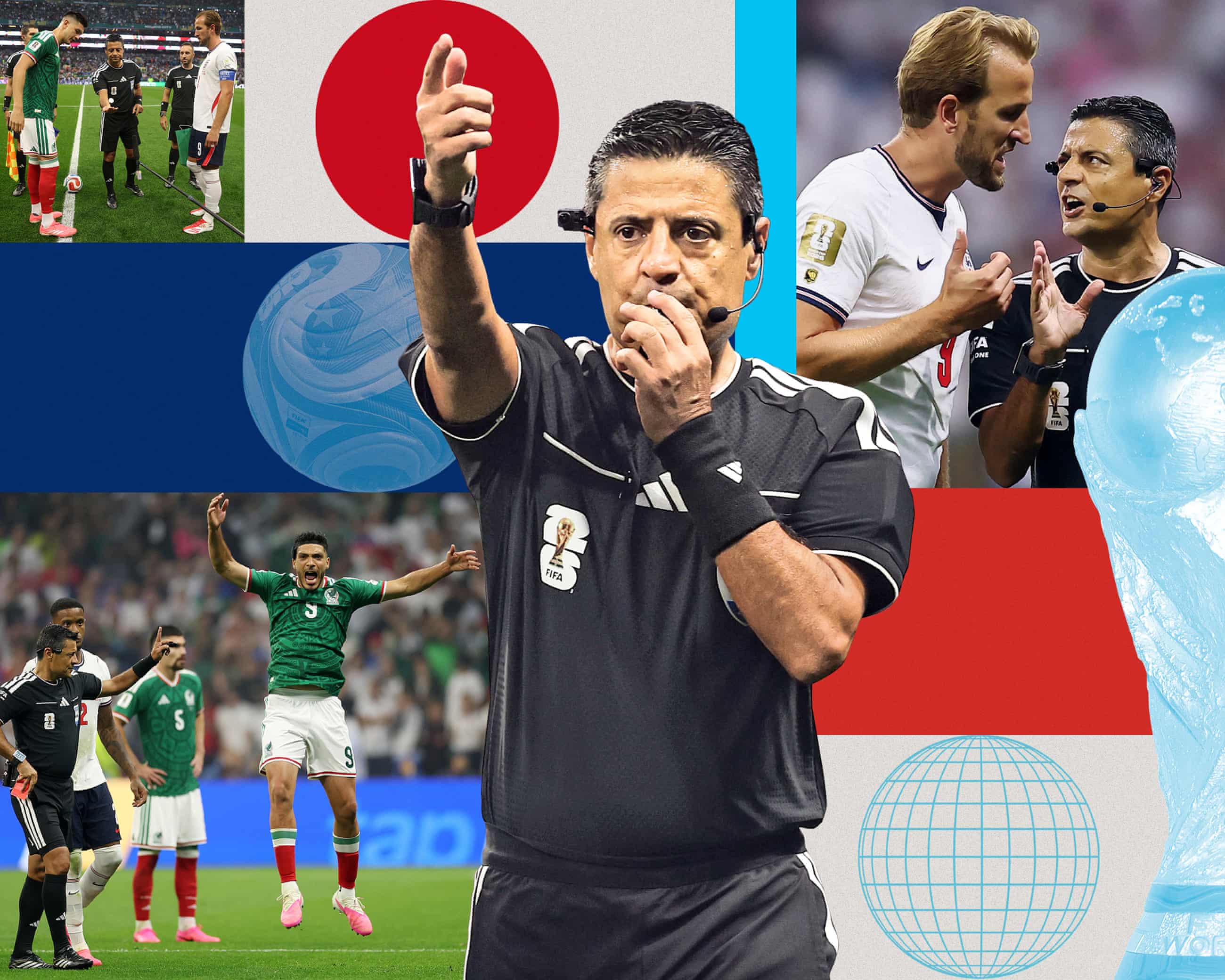
Guardian - England’s manager Thomas Tuchel called the officiating ‘just not good enough’ in the fiery last-16 tie. Now Alireza Faghani gives his version of events.
It was 6pm on 5 July in Mexico City, and Alireza Faghani, a 48-year-old Australian-Iranian, was asleep in the locker room, snoring. His assistants had turned the music down. Had it not been for the muffled roar of nearly 90,000 fans through the concrete walls of the Estadio Azteca, he could have slept until the following morning.
Faghani was the referee for Mexico v England in the last 16 at the 2026 World Cup. Mexico hadn’t lost a competitive game at the Azteca since 2013, at least in part because they’re used to the conditions. Situated 2,240 metres above sea level, the air contains less oxygen. Opponents struggle to breathe, let alone win.
This was Faghani’s third match of his fourth World Cup. A contender for the final, he needed a strong performance. Outside, pouring rain fell from the sky. Thunder cracked overhead. The storm had delayed kick-off by an hour, but it could do little to quell the fans, who banged their drums and sang their chants.
Eventually the noise jolted Faghani into action. He splashed water over his face and reviewed his notes again. As a referee in Australia’s A-League, he knew few of the players well, so he’d been studying their triggers, their temperaments and their tendencies in different match scenarios. “You know the key players, you understand their characteristics and how they normally behave in certain situations,” he adds.
The uncertainty around the kick-off time had disrupted his preparation for the match. Days earlier, amid warnings of extreme weather, Fifa officials had revealed plans to bring kick-off forward by six hours, only to shelve them after Keir Starmer, then the British prime minister, raised concerns that it would favour the hosts by giving England less time to adapt to the altitude.
During those hours of uncertainty, Faghani needed to adjust his pre-match physical and nutritional schedule accordingly. It was unsettling. “I don’t really have any superstitions, but I do like routine,” he says. “That routine gives me a sense of calm and helps me enter the field with a clear mind.”
But he tried not to spend too much energy on something he couldn’t control. “At this level, part of the job is staying calm and keeping your preparation as normal as possible, even when everything around you is changing.”
As kick-off approached, Faghani also resisted obsessing over his notes. He didn’t want to introduce bias into his decision-making. If you go into a match expecting a player to dive in a one-on-one situation, for instance, you might see a dive when there was genuine contact. Or you might see a player kick out when it was just normal movement. “That can be dangerous because you can start the match with a preconceived idea,” he adds.
So he visualised the opening moments. “I try to switch off from everything outside the dressing room and focus only on the match,” he says. Mexico had a tendency for rampant starts. England were hard in the tackle. “We expected a match with a lot of intensity, particularly in transition and in individual duels. The important thing was to be mentally prepared for the speed of the game.”
England kicked off to a chorus of boos, and those boos greeted their every touch. “The noise was unbelievable,” Faghani recalls. The same sound that had woken him up was now a distraction, and a threat to his impartiality on borderline calls – so he tried to block it out. “You are always aware of the atmosphere, especially with a home crowd like Mexico at the Azteca. Naturally, they react strongly to decisions involving their team, and you can feel that energy.”
In the opening stages, he wanted to let the match unfold without imposing himself on it. To assess the intensity, then decide how strongly he would need to intervene. “Every match develops its own personality, and one of the most important skills is recognising that personality as quickly as possible and adapting your refereeing to it.”
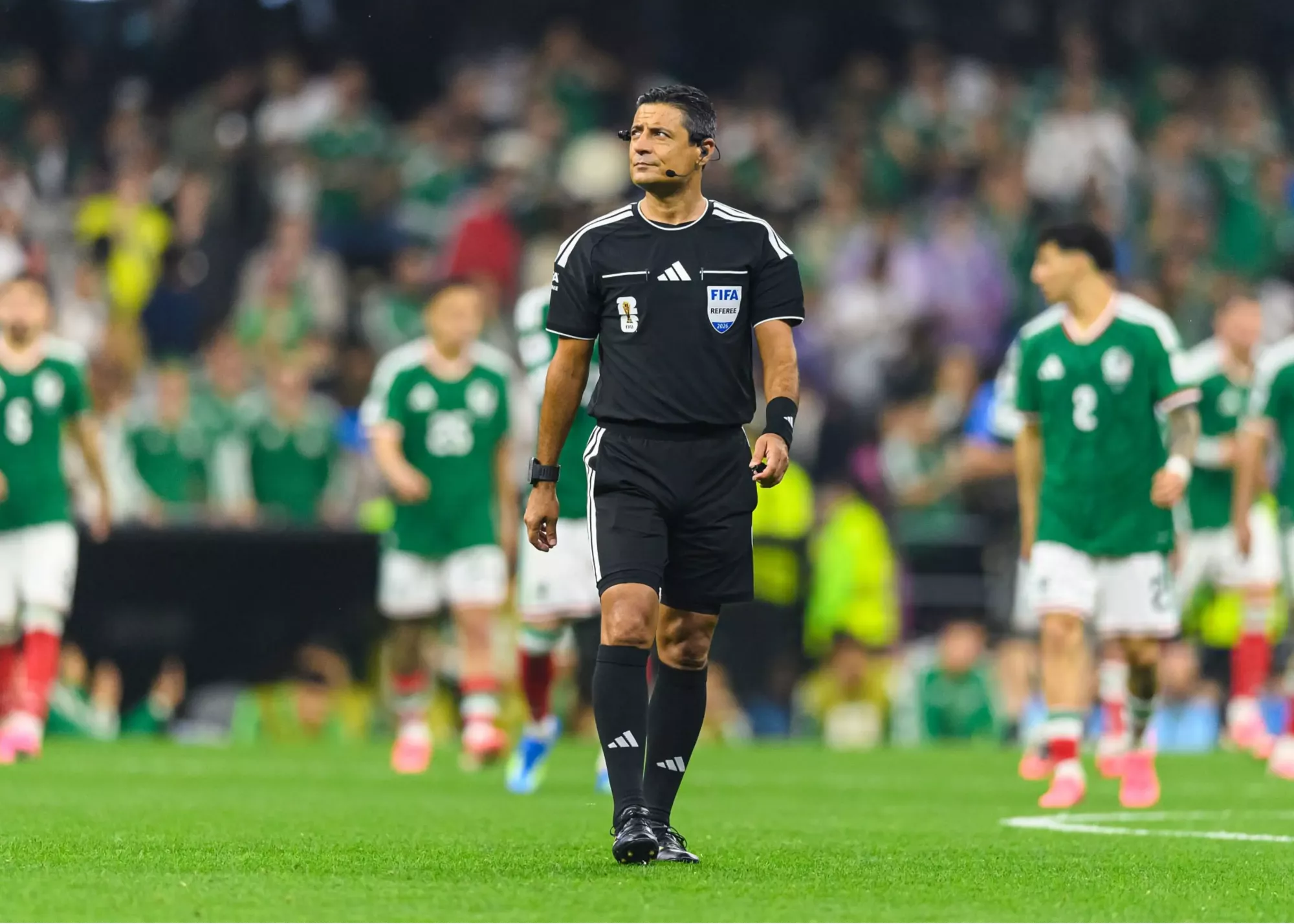
In this cauldron, however, Faghani was afforded no such luxury. With just seconds gone, Declan Rice stretched for a loose ball and caught an opponent in the head with his boot. With nearly a full match still to play, Faghani wanted to keep his yellow card in his pocket. Once he books a player, he loses that option to manage them later. Another yellow means a red, which fundamentally alters the balance of a match, damaging the spectacle.
But he felt he had no choice. He needed to communicate strongly to the players that dangerous challenges like this were unacceptable, otherwise he feared they would spread. So he flashed his yellow card into the air, igniting the Mexican fans. “It was a clear yellow card for me,” he says. “It also helped everyone understand the line from the beginning.”
Thomas Tuchel, the England manager, berated the fourth official on the sideline. As both sides launched into tackles, the fans urging them on, Rice’s chances of seeing out the match seemed slim. “Very quickly I felt it was going to be an intense, emotional, and fast game,” Faghani says. “I knew I needed to stay calm, be strong when necessary, but also give the players space to play.”
Finding this balance “comes from reading the players and the temperature of the game”, according to Faghani, but he struggled under the pressure. “You are constantly asking yourself whether an intervention will help the match or interrupt it unnecessarily.”
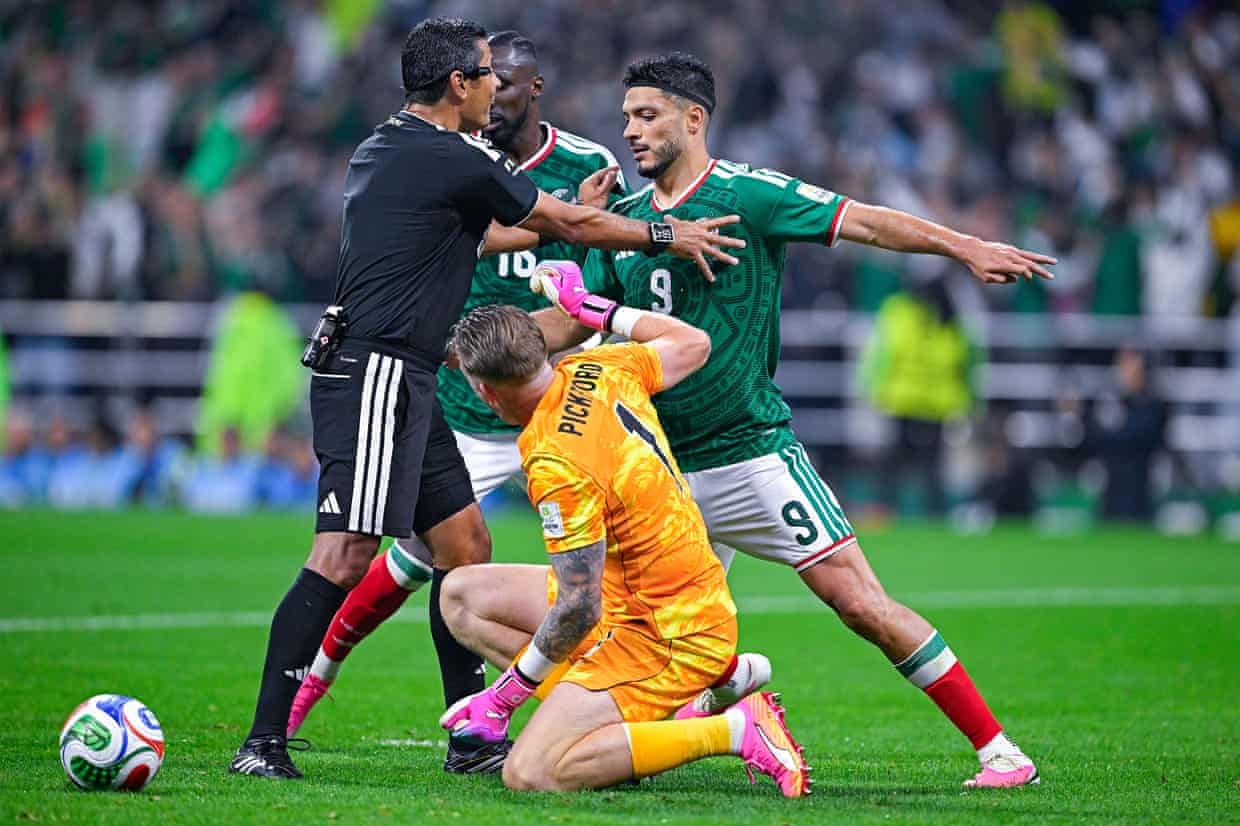
As softer fouls were punished and harder challenges went unpunished, frustration simmered and spread. A Mexican defender threw his arms in the air after being penalised for tugging down Jude Bellingham. “It’s not a foul,” he yelled. “It’s not a foul!” Faghani sprinted over, stood face to face with the player, and blew his whistle – an overt, intentional demonstration of authority. “In that environment, I felt it was important to deal with dissent immediately,” he says. “I wanted to send a clear message that communication was welcome, but there was a limit. Sometimes strong body language is more effective than using cards.”
Faghani repeated the tactic moments later when another Mexican screamed at him for delaying a quick throw-in. It seemed to have worked. The dissent dissipated, and in its place came flowing football from the Mexicans.
It was two English attacks that led to the game’s first decisive moments, though, with two Jude Bellingham goals. Mexico responded with a goal of their own. 2-1 to England. Faghani clenched his fists, knowing the pressure was only rising from here. But first he allowed himself a brief moment to drink in the skills on show. “You definitely appreciate the quality, but only for a second. As a referee, your mind immediately goes to the next responsibility – restart, player reactions, positioning, and staying focused.”
England held on until half-time. In the locker room, Faghani was mildly satisfied with his performance. “Overall, I felt we found a good balance,” he says, speaking about the line of intervention. “My mindset was simply to maintain the same concentration and consistency in the second half.”
Not even Faghani, however, could have anticipated what was to come.
In the 52nd minute, Jesús Gallardo, Mexico’s left-back, sprinted down the left wing. Jarell Quansah, England’s right-back, sprinted towards him. Between them, the ball rolled slowly over the turf. They were converging on it at full speed. If Gallardo got there first, he would be through on goal, with Raúl Jiménez waiting in the box. From the centre of England’s half, Faghani watched Quansah slide in, taking the ball and Gallardo. Gallardo rolled on the floor in agony and the Mexican fans roared, but Faghani carried on. “In real time, it looked like I could allow play to continue,” he says. Mexican coaching staff shot off their seats, gesticulating furiously at Faghani to stop play. Others shoved England staff.
At the next break in play, Mexican players swarmed the referee. He gestured for them to move away. Then his VAR, Nicolás Gallo Barragán, told him to pause the restart while he checked the incident. Faghani’s stomach dropped. He couldn’t help but replay Quansah’s challenge in his mind, wondering what he hadn’t seen. Then Barragán instructed him to use the pitchside monitor.
