When Home Advantage Really Matters in the Persian Gulf Pro League Before Using 1king

Lig Bartar Iran

Home advantage sounds simple until you start looking at individual fixtures. Some teams genuinely change at their own ground, while others play almost the same football everywhere. In the Persian Gulf Pro League, the useful part is finding out which type of team you are dealing with.

Before 1king, look at where the points actually came from

A club can sit near the top of the table without being particularly convincing away from home. Another may be several places lower but have built most of its season around a strong record in its own stadium. Put those two teams together and the league positions suddenly need a second look. That is the kind of matchup worth examining before opening 1king.

One side may have picked up most of its points at home, while the other has managed only a couple of away wins all season, which can make the gap between them in the overall table look far less convincing. The gap in the overall table may still favour the visitor, but the venue changes the discussion.

What matters is not simply that one side is playing at home. The interesting question is whether its results actually change there.

Some teams score more freely in familiar surroundings, while others simply become harder to beat. A few show almost no difference at all. That variation is what makes home and away records useful.

A midweek match can matter more than three places in the table

The calendar is often overlooked because it is less tidy than a form guide.

A team may arrive after an away cup match, a long trip and only a few days of recovery. Its opponent may have spent the same week training at home. On paper, nothing in the standings has changed, but the preparation for the next fixture clearly has.

You can often see the effect early in the game. A tired side may defend five metres deeper than usual, press less aggressively or take longer to commit players forward.

There is no need to turn every schedule detail into a theory. A quick check is enough:

Situation

What it may change

Midweek away match

recovery and intensity

Full week without a game

preparation time

Two difficult fixtures in a row

squad rotation

Important match coming next

team selection

None of these tells you the result. They simply explain why a team may not look exactly like its average season numbers.

The first twenty minutes often reveal whether the home edge is real

Pre-match numbers can only take you so far. Once the match begins, the opening spell tells you much more.

A genuinely comfortable home side often looks settled immediately. Passes are played faster, the press arrives on time, and the players seem to know exactly where the next option will be. The visitors, meanwhile, may need a few minutes to find their rhythm.

But the opposite can happen.

If the away team controls possession from the start and keeps the home side pinned back, the expected home advantage may not be having much effect at all.

That is where live football becomes more useful than a simple label such as “strong at home.” The opening minutes often show whether the pre-match read holds up. If the home side cannot impose itself early, the venue may matter far less than expected.

How 1king fits into a football read without taking over the analysis

Once the match has a clear shape, 1king becomes relevant in a much more natural way.

Suppose the home side usually starts quickly and creates most of its pressure before halftime. A first-half market may fit that pattern better than a full-time result. If the same team tends to protect narrow leads rather than chase a second or third goal, the overall match market may tell a different story.

The useful part is matching the market to what you have actually seen in the football.

It is easy to notice appealing odds first and only then look for numbers that support the choice. A stronger read starts with the match itself and leaves the market until later. Look at the fixture, decide what seems important, and only then see which market reflects that view.

The odds should come after the football, not before it.

Home advantage is useful when it explains the fixture, not when it replaces it

Venue matters in the Persian Gulf Pro League, but it makes more sense when read alongside recent form, home results and the opponent’s away record. A busy schedule can shift the picture again, especially when one side has had less time to recover. Then watch whether those patterns appear once the match starts.

Only after that does 1king become part of the picture.

Sometimes the home side really does look stronger because everything around the fixture supports it. In other games, the away team’s style or schedule removes much of that edge.

That is what makes home advantage interesting: it is not a fixed bonus attached to the stadium. It changes from one matchup to the next.

Wie sich Live-Roulette an kleine Bildschirme anpasst

Roulette

Der Wechsel vom Desktop zum Smartphone hat die Art und Weise verändert, wie Menschen Live-Roulette erleben. Früher stand der große Monitor im Mittelpunkt, heute findet ein Großteil der Sitzungen auf Geräten statt, die in eine Hand passen. Diese Verschiebung stellt Entwickler vor eine anspruchsvolle Aufgabe: Sie müssen ein Spiel, das von Detailtreue und flüssiger Videoübertragung lebt, auf eine Fläche von wenigen Zoll bringen, ohne dass die Atmosphäre eines echten Tisches verloren geht.

Warum Bildschirmgröße die Spielgestaltung bestimmt

Ein Roulette-Tisch besteht aus vielen Elementen, die gleichzeitig sichtbar sein sollen: das Rad, das Wettfeld, der Live-Stream des Dealers und die aktuellen Einsätze. Auf einem breiten Monitor lässt sich all das nebeneinander anordnen. Auf einem Smartphone im Hochformat entsteht dagegen ein Platzproblem, das nicht durch bloßes Verkleinern gelöst werden kann. Schrift, Chips und Zahlenfelder würden unleserlich und schwer zu treffen. Deshalb konzentriert sich die mobile Gestaltung auf wenige zentrale Prioritäten:

  • Das Wettfeld muss lesbar bleiben, damit Zahlen und Einsatzbereiche auch auf kleinen Displays klar erkennbar sind.
  • Der Live-Stream darf nicht zu viel Platz einnehmen, soll Dealer und Roulette-Rad aber weiterhin deutlich zeigen.
  • Chips und Schaltflächen brauchen größere Touchflächen, damit Einsätze präzise platziert werden können.
  • Sekundäre Informationen werden ausgelagert, etwa in Menüs oder ausklappbare Bereiche, damit die Oberfläche nicht überladen wirkt.

Aus diesem Grund setzen Studios auf ein neu gedachtes Layout statt auf eine reine Skalierung. Elemente werden priorisiert, gestapelt oder in ausklappbare Bereiche verlagert. Der Video-Feed rückt oft nach oben, während das Wettfeld darunter im Vordergrund bleibt. So bleibt die zentrale Handlung stets erreichbar, ohne dass der Nutzer ständig scrollen oder zoomen muss.

Technische Grundlagen der mobilen Anpassung

Damit Live-Roulette auf kleinen Bildschirmen zuverlässig läuft, greifen mehrere Technologien ineinander. Responsive Design sorgt dafür, dass sich die Oberfläche an Auflösung und Ausrichtung anpasst. Adaptive Videokompression reduziert die Datenmenge, wenn die Verbindung schwankt, damit der Stream nicht abbricht. Gleichzeitig achten Entwickler darauf, dass die Bedienung mit dem Daumen möglich bleibt, weshalb Schaltflächen größer und Abstände weiter ausfallen als in Desktop-Versionen.

Wer sich mit mobilen Roulette-Varianten beschäftigt, stößt häufig auf Anbieter, die ihre Tische speziell für unterwegs optimieren, so wie es etwa bei Money Moon Casino Online zu beobachten ist, wo das Wettfeld an das Querformat angepasst wird. Solche Beispiele zeigen, wie stark die Darstellung von der Ausrichtung des Geräts abhängt und wie flexibel moderne Tische reagieren müssen.

Vergleich der Darstellung: Desktop und Smartphone

Die folgende Tabelle fasst die wichtigsten Unterschiede zwischen der Desktop- und der mobilen Umsetzung von Live-Roulette zusammen. Sie zeigt auf einen Blick, wie stark sich Layout, Steuerung und technische Anforderungen je nach Gerät voneinander unterscheiden.

Merkmal

Desktop-Version

Smartphone-Version

Layout

Elemente nebeneinander

Gestapelt oder ausklappbar

Steuerung

Maus mit hoher Präzision

Touch mit vergrößerten Trefferflächen

Video-Feed

Fest im Blickfeld

Oben platziert, oft anpassbar

Verbindung

Meist stabil (kabelgebunden)

Schwankend, adaptive Kompression

Sekundäre Infos

Dauerhaft sichtbar

In Menüs ausgeblendet

Schaltflächengröße

Kompakt

Größer für Daumenbedienung

Rolle von Ladezeiten und Verbindung

Mobile Netze sind weniger stabil als kabelgebundene Anschlüsse, weshalb die Übertragung besonders robust sein muss. Puffermechanismen und mehrere Streaming-Qualitäten stellen sicher, dass das Spiel auch bei schwächerem Empfang weiterläuft. Kurze Ladezeiten sind dabei entscheidend, denn Verzögerungen zwischen Aktion und Reaktion können den Eindruck eines echten Tisches beeinträchtigen. Studios testen ihre Tische deshalb unter unterschiedlichen Netzbedingungen, um ein gleichmäßiges Erlebnis zu gewährleisten.

Gestaltung für Touch-Bedienung

Die Steuerung per Berührung unterscheidet sich grundlegend von der Maus. Auf dem Smartphone fehlt die Präzision des Cursors, und Finger verdecken oft einen Teil des Bildschirms. Entwickler begegnen dem mit vergrößerten Trefferflächen, klaren Bestätigungsschritten und deutlichen visuellen Rückmeldungen, wenn ein Einsatz platziert wird. Fehltippen soll dadurch reduziert werden, ohne dass die Bedienung langsamer wirkt.

Ein weiterer Aspekt betrifft die Anordnung der Chips und der Bestätigungstasten. Sie liegen häufig im unteren Bereich, weil dort der Daumen am leichtesten hinreicht. Kritische Aktionen werden bewusst getrennt platziert, damit ein versehentliches Wiederholen oder Verdoppeln des Einsatzes vermieden wird. Diese durchdachte Ergonomie ist ein zentraler Grund dafür, dass mobiles Live-Roulette heute als vollwertige Alternative zur Desktop-Variante gilt.

Balance zwischen Übersicht und Atmosphäre

Die größte Herausforderung besteht darin, Funktionalität und Stimmung zu vereinen. Ein zu stark reduziertes Interface wirkt steril und nimmt dem Spiel den Reiz des echten Tisches. Ein überladenes Layout dagegen überfordert den kleinen Bildschirm. Gute mobile Umsetzungen finden hier einen Mittelweg, indem sie das Videobild groß genug halten, um Dealer und Rad klar zu zeigen, und gleichzeitig sekundäre Informationen ausblenden.

Statistiken, frühere Ergebnisse oder alternative Wetten verschwinden oft in ausklappbaren Menüs. Sie bleiben verfügbar, drängen sich aber nicht in den Vordergrund. Auf diese Weise entsteht eine aufgeräumte Oberfläche, die dem Nutzer die Kontrolle lässt und trotzdem den Eindruck eines lebendigen Tisches vermittelt. Diese Priorisierung nach Wichtigkeit prägt nahezu jede erfolgreiche mobile Fassung.

Worauf die Entwicklung künftig hinausläuft

Die Anpassung von Live-Roulette an kleine Bildschirme zeigt, wie eng Technik, Design und Nutzererwartung zusammenhängen. Responsive Layouts, adaptive Streams und touchfreundliche Steuerung sorgen dafür, dass das Spiel auf dem Smartphone nicht als Kompromiss, sondern als eigenständige Erfahrung wahrgenommen wird. Entscheidend bleibt das Gleichgewicht zwischen klarer Übersicht und der Atmosphäre eines echten Tisches. Mit steigender Leistung mobiler Geräte und stabileren Netzen dürfte sich dieser Trend weiter verfeinern, sodass der Unterschied zwischen Desktop und Handheld zunehmend verschwimmt.

How Interactive Polls and Trivia Are Changing Live Football Broadcasts

Soccer

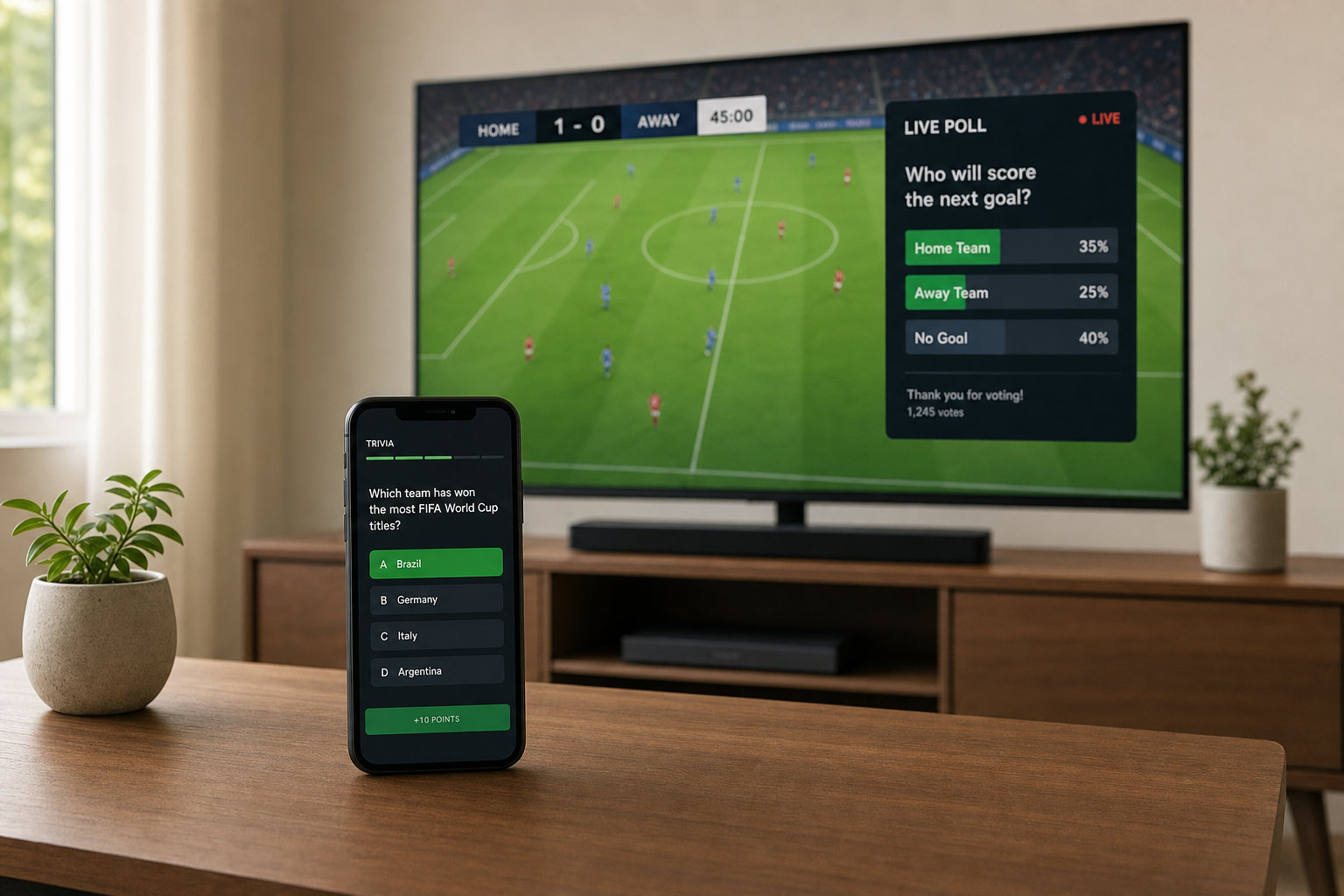
Live football is evolving from a passive viewing experience into an interactive, community-driven event. Fans increasingly participate in real-time polls and trivia, shaping matchday engagement in ways that were unimaginable just a few years ago. These features are becoming an integral aspect of how supporters connect with each other and with the game itself.

Football viewing habits have shifted toward a more participatory model, as audiences use smartphones and connected devices alongside match broadcasts. Some digital entertainment products, including roulette games, have demonstrated how second-screen engagement can complement live events, and broadcasters have noted that fans appreciate active involvement during matches. This trend is transforming live football into a more dynamic, two-way experience. Interactivity can be part of the excitement, offering new ways for viewers to remain involved every minute the match is on.

Modern polling and trivia experiences during matches

Interactive polling is now a common sight during live football, with questions related to pivotal moments or tactical decisions. Fans might be asked who should take the next penalty or which player deserves the “man of the match” title, giving instant feedback that reflects the collective voice of supporters watching around the globe.

Live trivia prompts often appear during breaks in play, such as halftime or following a VAR check. These questions challenge viewers’ knowledge of team history or in-game statistics and add an engaging element that makes stoppages more enjoyable. This style of content is carefully crafted to keep viewers interested, offering refreshable questions that evolve with the flow of the match.

Why media partners invest in interactive features

Broadcasters and rights holders recognize the value of interactive polling and trivia for maintaining viewership during quieter periods. When play pauses, whether for an injury or a tactical change, these digital features help keep momentum and support continued engagement.

The benefits also extend to building long-term loyalty. By creating a sense of involvement through continuous participation, fans are encouraged to return to official platforms regularly. This approach can strengthen attachment to fixtures that might otherwise be overlooked, helping to ensure that both new and long-term supporters remain engaged throughout the season.

Impact on fan conversation and social interaction

One of the most notable changes is how shared participation shapes interaction, not just at the stadium but across households and among social groups. Group chats and social media discussions can become livelier as friends talk about poll choices or celebrate answering trivia questions correctly at the same moment. As a result, the emotional connection to matches can feel stronger and more significant for fans.

The interplay between on-screen prompts and online reaction creates a feedback loop, strengthening connections between viewers and the broader football community. Interactivity now stands alongside other digital entertainment experiences, and for many fans, it forms a regular ritual as central as watching the match itself. Industry commentary has suggested that live broadcasts with embedded participation features may enhance the shared sense of anticipation throughout each fixture.

Club and league benefits, and potential concerns addressed

Football clubs and organizing bodies can gain insights into supporters’ preferences and matchday moods through polling and trivia responses. This information may be useful for refining future broadcasts or tailoring digital services to fan interests. Those who might not follow every game closely can still take part, making casual engagement more rewarding and inclusive.

However, adding these interactive layers comes with some challenges. There are ongoing discussions over whether new features could distract viewers from the gameplay or contribute to increased screen time. Data privacy and clear communication about how responses are stored and analyzed remain important to maintaining trust between fans and organizations.

Future directions for interactivity within football coverage

The move toward integrated broadcast graphics and mobile app synchronization is likely to continue. Soon, questions and polls could appear at contextually relevant moments, such as substitutions, set pieces, or periods of added time, making fan participation even more seamless and personalized. Interactivity will likely become as standard as score graphics or commentary, woven into televised football from start to finish.

This ongoing evolution suggests that broadcast coverage may adapt further to how contemporary audiences want to experience football. As fan expectations rise and interactive features become more advanced, polling and trivia are positioned to remain a key part of the sport’s future, supporting the game’s community roots and strengthening digital engagement with every fixture.

How Online Entertainment Fits Into the Modern Football Viewing Experience

Soccer

Football fans today blend matches with interactive digital experiences, turning viewing into an always-connected activity. Multiple screens, live data, and online entertainment options fill the gaps throughout matchdays. This evolving landscape is changing how you experience football, deepening your connection and knowledge of the game.

The modern football experience is no longer limited to just watching the match live on television. With your smartphone or tablet in hand, you can now access a range of interactive content and social features before, during, and after the action. For example, tuhti casino may be one of several activities available alongside fantasy leagues and live statistics, offering neutral options for engagement throughout different moments of a match. As the boundaries between live matches and digital entertainment blur, some fans report that these innovations can support new forms of involvement with football.

Exploring the shift to multi-screen football watching

On matchdays, you might find yourself tracking the game on one screen while browsing social feeds or group chats on another. This “second-screen” behavior means watching football is no longer a one-dimensional event but a multi-layered experience shaped by online entertainment and social interaction.

Following live stats, scrolling through match threads, or checking video highlights during a pause lets you keep up with fast-moving developments in real time. Polls, fantasy picks, and in-play prediction games have become fundamental to many football fans’ routines, providing fresh ways to engage without looking away from the main event.

Pauses in play and the rise of quick entertainment

The natural rhythm of football creates frequent opportunities for extra entertainment. Pre-match build-up, half-time intervals, injury stoppages, and VAR checks all serve as prompts for fans to seek digital engagement that complements, rather than distracts from, the live action.

During these quiet moments, features like quizzes, squad builders, and real-time trivia can keep your interest high. These interactive activities, often linked to ongoing league storylines or recent match events, help make every phase of the match feel relevant and interactive.

How interactive formats impact engagement and focus

When you join in on quizzes or use fantasy-style mini games, you not only keep entertained but also often learn more about players, tactics, or team histories. These formats can deepen your understanding and help build stronger fandom bonds by connecting you more closely to match narratives.

However, engaging with too many distractions may pull focus away from the match itself, fragmenting attention if moderation is not observed. Clubs and broadcasters recognize this balance: they often integrate official apps, moderated communities, and live data overlays so fans can participate in football-first spaces that respect the rhythm of the game. These approaches help keep the focus primarily on football itself, even as casino-style platforms and similar content become available.

Why Sports Betting Makes Watching Football Actually Fun Again

Soccer

I used to watch Iran's national team with my phone glued to my hand. Half-engaged at best, scrolling Instagram whenever the pace slowed down. I love football, always have, but it became background noise while I did other stuff.

Something shifted when I started placing small bets on matches. Not insane amounts—we're talking $15, sometimes $20—but just enough to make every pass matter. You've probably experienced this: watching a friendly between two teams you have zero connection to feels like torture. Put $10 down through RexBet though and suddenly you're breaking down tactical adjustments like an analyst.

The Psychology Behind It

Iran played Nigeria in a friendly last month and lost 2-1. Had a small bet running during that match. Watched every minute without touching my phone once. I knew exactly when substitutions were happening, could tell the defense was gassed around the 67-minute mark, understood why Ghalenoei switched formations.

Matches where I had nothing on the line? Couldn't tell you final scores. Barely remember watching them.

Before this sounds like I'm pushing gambling problems, let me explain my system. Monthly limit of $80, period. Some months I spend $43, other times the full amount. Once I hit that ceiling, I'm done placing bets and just enjoying matches as a regular viewer.

Making Research Actually Interesting

Here's something I never expected. I read injury reports now. Actual injury reports. The guy who used to skip everything except highlight reels now checks team news at 7:30am while drinking coffee. When you've got even a small amount riding on a match, suddenly friendly games have real stakes. Will Taremi play the full 90 minutes or get pulled at halftime for rest?

Yellow card accumulation for defenders. Strikers in scoring droughts lasting 4 matches. Coaches who prefer defensive tactics in away fixtures. I've learned more about actual football tactics in 6 months of casual betting than I did in years of passively watching whatever was on TV.

The Social Angle Nobody Talks About

My friend group runs this chat now with eight people. We share picks before kickoff, argue about whether odds make sense, celebrate our wins, and absolutely destroy each other's awful predictions. Tractor got eliminated from the AFC Champions League 3-0 and we had a 47-message thread picking apart everything that went wrong.

Before? Our football talk was maybe 3 texts. "You watch?" "Yeah." "Wild." End of conversation.

Betting creates deeper discussions because you're invested now, you notice details you wouldn't have otherwise, gives you actual substance to analyze together. We're planning to meet up in person for World Cup matches.

Won $67.50 last week on a correct score prediction. Felt brilliant for maybe 12 hours until my next three bets all lost. The wins feel amazing, but the losses make you study harder and think about probability in ways you wouldn't otherwise.

Small stakes work. You just need enough to force yourself to pay attention properly. That's what brought the joy back to watching football for me, made it feel new again instead of routine background noise.

How Mobile Apps Changed the Way Football Fans Follow Matches and Odds

Soccer

Football coverage once moved at the speed of television schedules and next-day reports, but supporters now carry live match information in their pockets. Among the tools associated with modern matchday is demand for apps such as 1xbet تحميل apk, alongside live-score, statistics and club-news services. The broader change is a move from passive viewing to a personalised experience in which every fan can choose fixtures, alerts, data and commentary.

From TV to the Second Screen

Television remains the best way to watch a full match, especially when supporters gather together. The phone, however, has become a second screen that adds information without interrupting the broadcast. A fan can check the line-up, review a player’s recent form or follow another fixture taking place at the same time.

Notifications also make coverage portable. Someone who cannot watch live may receive alerts for kick-off, goals, cards and the final whistle. Short commentary and event timelines provide enough context to understand how the match is developing.

This has changed expectations for football media. Supporters no longer want only a final score; they expect verified team news, fast corrections and data that explains the performance. Clubs and leagues have responded by publishing directly through their own apps and social channels.

What Football Fans Expect from a Sports App

Speed matters, but accuracy matters more. An incorrect goal alert or outdated line-up quickly damages trust. The strongest sports apps therefore combine fast data feeds with clear timestamps and identifiable sources.

Personalisation is another important feature. Fans want to follow selected clubs and competitions without receiving every update from the platform. Options to mute spoilers, adjust alert types and change time zones make the service more useful across the region.

A typical football toolkit may include:

  • Live scores, fixtures and tables.
  • Confirmed line-ups and injury updates.
  • In-play statistics and expected-goals data.
  • Club, league and transfer news.
  • Odds comparison and prediction tools.
  • Android betting apps restricted to adults.

Good design keeps these features understandable. A crowded screen filled with flashing numbers can make it harder to follow the game. Clear menus and accessible explanations are especially important for advanced metrics.

How Data Changed Match Analysis

Statistics have moved from specialist reports into everyday football discussion. Supporters can now examine possession, field tilt, passing networks and shot quality within minutes. This information can challenge the impression created by the scoreline.

Expected goals, commonly known as xG, estimates the quality of scoring chances rather than predicting a guaranteed result. A team may produce the better chances and still lose because finishing and goalkeeping remain decisive. The metric is most useful when combined with tactical observation.

Odds also change as new information enters the market. A red card, injury or goal can alter the implied assessment of possible outcomes. These movements describe a market response; they do not remove uncertainty or promise that a particular selection will succeed.

Avoiding Misinformation on Matchday

The speed of mobile reporting creates opportunities for error. Unverified accounts may announce a transfer, injury or suspension before any official source confirms it. Cropped video clips can also remove the context needed to judge a refereeing decision.

Fans should compare claims with league, club and established media channels. A screenshot without a visible source or timestamp is weak evidence. Waiting a few minutes for confirmation is usually better than sharing a false report.

Privacy deserves similar care. A score app normally has no obvious need to read contacts or text messages. Users should review permissions, use official stores or verified developer websites, and keep both the app and operating system updated.

Responsible Betting and Financial Limits

Betting should be approached only as entertainment for adults, not as an investment strategy or source of regular income. The operator retains a statistical margin in the prices it offers, and no model, tipster or run of past results can guarantee a profit.

Users must be at least 18 and should confirm the law that applies in their location. A personal spending limit should be set before any activity begins, using only money that can be lost without affecting essentials or savings. Borrowing and chasing losses increase the risk of harm.

Time controls, deposit limits and self-exclusion tools can help users remain in control. Anyone who feels pressure to continue should stop and seek support rather than attempting to recover money through another wager.

Mobile technology has made football coverage faster, deeper and more interactive. Its value is greatest when data adds context, alerts remain manageable and sources are checked carefully. The phone can enrich matchday, but the football on the pitch should remain the main event.

Why Integration Matters in the Evolution of QQMacan’s Online Gaming Ecosystem

Soccer Bet

The online gaming industry is no longer defined simply by the number of games available on a platform. Modern players expect a connected digital experience in which discovering games, accessing accounts, navigating different features, completing transactions, and receiving support all work together smoothly. This shift has made integration one of the most important factors in the evolution of online gaming ecosystems.

For platforms such as QQMacan, integration can be viewed as the foundation that connects different parts of the gaming experience. Rather than treating games, payments, account management, customer support, and user interfaces as isolated components, an integrated ecosystem brings these elements together so that users can move between them with minimal friction.

Understanding Integration in Online Gaming

In simple terms, integration means enabling different software systems or services to communicate and work together. In online gaming, this can involve game providers, payment services, user-account systems, analytics tools, security technologies, customer-support channels, and other digital services.

Application programming interfaces, commonly known as APIs, are frequently used to create these connections. They allow different applications to exchange information and perform specific functions without requiring every component to be built from scratch. In iGaming environments, APIs can connect game content, payment systems, identity services, data feeds, and security tools into a broader ecosystem.

This matters because today’s players interact with many different functions during a single session. If those functions are disconnected, even a visually attractive platform can feel inconvenient. Integration helps create a more unified experience.

Connecting a Diverse Game Environment

One of the most important advantages of integration is the ability to bring different game providers into one accessible environment. QQMacan’s website highlights several popular providers, including Pragmatic Play, PG Soft, Habanero, Spadegaming, and Joker Gaming.

For players, this type of variety is valuable because they do not necessarily want to visit multiple platforms to explore different game categories. A connected ecosystem can make content discovery easier by providing a central location from which users can explore available options.

Integration also provides advantages from a platform-management perspective. Instead of managing every provider as a completely separate system, a structured integration layer can establish consistent communication between the platform and its external services. Modern gaming-platform architecture commonly uses defined APIs and integration boundaries to connect game suppliers, payments, identity services, CRM systems, and reporting tools.

As an ecosystem develops, this approach can make it easier to introduce additional services without redesigning the entire platform.

Improving the Player Experience

Integration is ultimately valuable because it can improve how users interact with a platform.

Imagine a player who discovers a game, opens an account, checks available options, completes a transaction, and returns to gaming. If every step requires a different interface or repeated authentication, the experience becomes unnecessarily complicated.

A connected ecosystem can reduce these interruptions. Account information, navigation, game access, and transaction functionality can be organized around a consistent user journey.

QQMacan emphasizes convenient navigation and responsive access across smartphones, tablets, and desktop computers. Its website also describes the platform as designed to make online gaming exploration more practical through an integrated digital environment.

This type of cross-device accessibility is particularly important because mobile devices have become a major gateway to digital entertainment. A platform that maintains a consistent experience across different screen sizes can make it easier for users to interact with the ecosystem wherever they are.

Integration and Payment Convenience

Payments are another area where integration plays a critical role.

A gaming platform can offer an extensive collection of games, but complicated deposits or withdrawals can negatively affect the overall experience. Payment integration connects the gaming environment with financial services, allowing transactions to become part of the broader user journey rather than a completely separate process.

QQMacan’s website lists local bank-transfer options including BCA, Mandiri, BNI, and BRI, along with e-wallet services such as Dana, OVO, GoPay, and LinkAja.

From a technical perspective, payment integrations need to handle more than simply initiating a transaction. They may also need to communicate transaction status, account balances, confirmations, errors, and other relevant information. Industry integration guidance emphasizes the importance of clearly defined data flows, status handling, authentication, monitoring, and error management when connecting gaming platforms with external services.

When these components are properly coordinated, the result can be a more predictable and convenient transaction experience.

Supporting Security and Account Protection

As gaming platforms become more interconnected, security becomes increasingly important.

Integration should not mean connecting systems without boundaries. Every external service introduces additional considerations involving authentication, authorization, data transmission, monitoring, and error handling. A well-designed integration strategy therefore needs to consider security from the beginning.

QQMacan states on its website that user data and interactions are protected through SSL 256-bit encryption and that customer support is available around the clock.

More broadly, modern gaming platforms can use structured integration boundaries to separate different services while controlling how information moves between them. This can help reduce unnecessary exposure and make it easier to monitor interactions between connected components.

Security is particularly important when account management and payment services are involved. Strong authentication, appropriate access controls, secure data transmission, logging, and careful handling of failed requests are all important considerations for an interconnected gaming environment.

Integration Creates Opportunities for Better Data

Another major benefit of integration is the ability to connect information from different parts of a platform.

When game activity, account interactions, transaction events, and customer-support information are completely isolated, it becomes difficult to understand the overall user experience. Integrated systems can provide a more complete view of how different parts of the ecosystem interact.

Analytics can then help platform operators identify technical problems, understand navigation patterns, evaluate feature performance, and improve the overall digital experience.

Modern iGaming architecture increasingly connects analytics and reporting systems with other platform components. This allows data from different services to be organized into more useful operational insights.

For a growing platform, this data-driven approach can be particularly valuable because improvements can be based on observed behavior rather than assumptions.

Preparing QQMacan for Future Growth

Perhaps the most important reason integration matters is scalability.

An online gaming ecosystem cannot remain static. New games, technologies, payment methods, devices, security requirements, and customer expectations will continue to emerge. A platform built around disconnected systems can become increasingly difficult to maintain as new features are added.

By contrast, structured integrations can create a more flexible foundation. A platform can establish standardized interfaces so that new providers or services can be connected without rebuilding unrelated components.

This does not mean every integration is automatically simple. Poorly designed connections can create their own problems, including inconsistent data, failed transactions, compatibility issues, and maintenance challenges. For this reason, modern integration strategies emphasize versioning, testing, monitoring, retry mechanisms, authentication, and clearly defined responsibilities between systems.

The objective is therefore not simply to have more integrations. It is to have better integrations.

The Future of a Connected Gaming Ecosystem

The evolution of online gaming is moving toward increasingly connected digital environments. Players want variety without complexity, convenient transactions without unnecessary steps, responsive interfaces across devices, and reliable access to the features they use most.

Integration helps make these expectations achievable.

For QQMacan, the concept of an integrated gaming ecosystem provides a foundation for bringing game content, navigation, transactions, customer assistance, and digital services into a more cohesive experience. Its current platform emphasizes game-provider variety, responsive access, transaction convenience, and 24-hour customer support, all of which are important components of a modern online gaming environment.

As technology continues to evolve, integration will become even more significant. Platforms that can connect services efficiently while maintaining security, reliability, usability, and scalability will be better positioned to adapt to changing expectations.

Ultimately, integration is not simply a technical feature operating behind the scenes. It is what allows separate digital components to function as one ecosystem. For platforms such as QQMacan, that connected approach can play a central role in shaping a smoother, more adaptable, and more engaging online gaming experience.


How Packed Schedules Shape Player Performance Over a Long Football Season

Soccer

Rising fixture congestion is reshaping the realities of top-level football, with jam-packed schedules now the norm for clubs and players. Demanding turnarounds, relentless travel, and crammed domestic calendars push squads to their limits. Understanding the effects of fixture congestion is key to appreciating its impact on results, tactics, and the health of elite athletes.

Fixture congestion has intensified in recent seasons as clubs juggle expanded competitions and travel across tight calendars. This topic is discussed in various football analysis platforms, including Hurjaa. Matches are often scheduled within days of each other, giving players little time to recover physically and mentally. In this environment, both the pace and quality of football can be affected, and clubs must adapt to ensure peak performance is sustained over long spells. Recognizing how fixture congestion shapes player fatigue, injury risk, and tactical choices helps you interpret what unfolds on the pitch and the broader patterns in league standings.

Short gaps and the realities of congestion

When you look at fixture congestion, you see teams regularly facing only two or three days between matches. This means significantly reduced periods for tactical training or rest, giving little opportunity for players to recover fully after high-intensity action.

Congestion is marked by limited time for regeneration, resulting in accumulated physical fatigue over a long football season. Clubs that compete on multiple fronts often endure particularly challenging stretches where squad depth is truly tested.

Visible and hidden effects on performance

During periods of fixture congestion, players often cover less distance at high intensity, and their sprint frequency declines. Legs may feel heavier, making pressing and quick transitions more difficult as seasons wear on.

Technical mistakes can become more frequent under fatigue, especially in the later phases of games. Decision-making speed may drop, and teams might adopt more cautious tactical approaches to minimize risk when physical limitations set in.

Adaptations, injury risk, and squad depth

Soft-tissue injuries are more common during congested periods, as repeated exertion with insufficient recovery increases vulnerability. This can raise the recurrence risk for players recently returned from injury, because proper rest is difficult to secure when schedules compress.

The hidden cost of pushing through minor injuries is often underestimated, particularly in teams lacking options to rotate heavily. As a result, maintaining player availability becomes a major challenge, and coaches must carefully manage playing minutes to minimize setbacks.

Tactical and strategic responses to dense schedules

To cope, coaches rotate lineups and sometimes adjust game strategy, managing key players’ minutes or lowering pressing intensity for select matches. Some teams switch to a deeper defensive shape or emphasize controlled possession to limit their physical load when the schedule is congested.

Fixture congestion places greater value on squad depth, as those with more resources can rotate quality options or give youth players valuable experience. However, prolonged congestion can highlight disparities between clubs, affecting results and shaping the rhythm of long football seasons.

How Do Match Factors Affect Football Iran Pro League Betting Odds?

Iran Pro League Betting

The Iranian league is one of the most interesting ones to follow, because you can never tell for sure which team is going to end up being the winner. If you are following such events with the help of websites, like https://vivatbet.ie/en/line/football/32887-iran-pro-league, you might have seen a pattern already, that the winner is historically the one with the fewest unforced errors. Leading teams like Persepolis, Esteghlal, and Sepahan build their play from a solid defense.

The outcome of a match is determined by a team's ability to maintain compactness. Coaches use low or medium block formations, like popular schemes 4-2-3-1 or 5-3-2, minimizing the gaps between the defense and midfield. The key tactical factor for success is the overlap of central zones. By forcing the opponent to shift attacks to the flanks and rely on crosses, the defending team gains an advantage in the air. In most intense Iranian league matches, possession rarely guarantees success. Teams that consciously give up the initiative and rely on quick transition phases (counterattacks) historically have a higher winning percentage.

Physical Training And Struggles On Standards

Iranian football is demanding of athletes' physical fitness. In evenly matched matches, where breaking down a defense with a low pass is almost impossible, two components come to the fore:

  • Winning duels. The ability of defensive midfielders to win rebounds, second balls near their own and opponents' penalty areas directly determines who dictates the tempo of the game.
  • Set pieces. Corners, free kicks, and even throw-ins near the goal are the main weapons in the Iranian Professional League. More than 30% of all goals in the championship are scored from set pieces. Having tall, physically powerful central defenders and a player with radio-controlled delivery often becomes the X-factor that leads to a 1-0 victory.

These are important aspects that influence the outcomes in football, and especially in football Iran. Pro League betting odds take these factors into account when they are formed by bookmakers. 

Analytics – What Metrics Do Experts Pay Extra Attention To?

You always need to pay attention to certain aspects of the game, as there are elements that create an objective picture of a match. Analytics with years of experience focus on specific data, as it allows them to filter visual noise while making their predictions:

  • Pressing Intensity. Allows you to understand how aggressively a team tried to win the ball back in the opposing half.
  • Penalty Box Shot Conversion. With few chances created, clinical finishing becomes critical. A team can take 15 shots from distance and lose to a team that took two shots from inside the box – high expected goals metric.
  • Field Tilt. The percentage of passes completed in the final third. This metric reflects true territorial dominance better than simple ball possession.

Without information like this, making a wise decision in the highly intense Iran Pro League is impossible. 

Geography, Climate, and Physical Exhaustion

One of the most underestimated factors that influences match results in Iran is the country’s unique and challenging geography. The Iranian Professional League covers vast territories with different climatic conditions. For a team from central Iran, an away match can turn into a physical test, extending beyond football tactics.

Matches in the southern province of Khuzestan, home to clubs like Foolad and Sanat Naft, are played in extreme heat and humidity. On the other hand, a trip to Tabriz to play Traktor means playing in high-altitude conditions and bitter cold. These climate fluctuations affect the tempo of the game. Analysts note that in such specific away matches, teams are physically unable to maintain high pressing for 90 minutes. As a result, the game is broken up into episodes, the tempo in the second half drops, and the likelihood of late goals due to a loss of concentration due to fatigue increases.

The Role Of Legionnaires In The Destruction Of Defensive Blocks

Due to strict limits on foreign players, Iranian clubs are forced to approach their selection with meticulous precision. A foreign player in the Professional League is typically not a rotation player, but a key element of the system, whose main task is to make a difference in matches where team tactics reach a dead end.

Since local teams defend very low and compactly, Iranian giants lack players capable of opening up defenses with unconventional individual moves. This is why foreign players from such regions, like Brazil, Africa, or Europe, become the key to victory. Their ability to beat the opponent one-on-one, deliver a penetrating pass between the lines, or shoot from distance under intense pressure disrupts mathematically calibrated defensive structures. In a tight match, the presence of one creative foreign player with individual skills on the field outweighs the opponent's hours of tactical preparation.

The Emotional Background And The Enormous Pressure From The Stands

When analyzing the Iranian championship, it is impossible to ignore the fan base. The fan culture here is passionate, and stadiums become a part of the reason why specific teams can win. A classic example is the Tehran derby between Esteghlal and Persepolis at Azadi Stadium, which can accommodate up to 100000 spectators.

This level of noise creates unprecedented psychological pressure. Firstly, it directly impacts visiting teams, who tend to make higher percentages of mistakes in the simplest passes due to simple nervousness, especially among young players. Secondly, this factor inevitably puts pressure on referees. In critical situations, it is difficult for referees to make decisions against the home team amid the deafening boos of tens of thousands of fans. As a result, the home advantage factor in the Iranian Pro League carries much greater statistical weight than in most European leagues, making away wins against clubs with large fan bases an extremely rare occurrence.

Half-Time: How to Maximize Those 15 Minutes Before the Football Resumes

Half-Time Soccer

15 minutes isn’t a long time. After the excitement of watching the first portion of a match, the built-up adrenaline can see the half-time break vanish quickly before the action resumes.

With a little planning, however, it’s possible to turn this brief interruption into a useful, enjoyable part of your matchday routine. Here’s how to maximize those 15 minutes before the second half begins. 

Grab a Drink and Something to Eat

The obvious starting point is refreshments. If you’ve been watching closely throughout the first half, this is your chance to step away from the screen without missing any action. It’s also an ideal chance to refuel after expending energy.

If you know you’ll want a snack, it is recommended to prepare something before kick-off. Otherwise, use the opening few minutes of the break to make a drink and grab something from the kitchen. With everything ready, you can settle back down well before the players return to the pitch.

Catch Up Without Getting Distracted

Your phone can be a quick source of entertainment during half-time. It’s a prime opening to check messages, respond to anything important, and quickly catch up with what has happened elsewhere in the football world. The latter could be everything from checking other scores to seeing the latest social media reactions to the first half.

Just be careful not to get drawn into endless scrolling. When you’re just browsing your feed with little thought, those 15 minutes can disappear remarkably quickly.

Squeeze in a Quick Gaming Session

Did you know half-time is long enough for some surprisingly varied gaming experiences? Even when you only have 15 minutes available, you don’t necessarily need to commit to a lengthy session.

One clear example is playing at Kanuuna instant casino. The platform allows you to get into the action immediately without needing to create or login to an account. The thousands of games on offer are also built to load instantly. Within a matter of seconds after the whistle goes to end the first half, you could be right in the middle of the action.

The range of games also means you can tailor the experience to the time available. You might play a few slots first. Then jump onto a table for a couple of blackjack hands before a quick crash game. The key is selecting something that fits naturally into a brief session. Casino gaming is a great way to fill the time before returning to the football.

Reset Before the Second Half

Half-time isn’t always about finding another source of entertainment. Sometimes, the best use of those 15 minutes is simply stepping away from the screen.

Stand up. Walk around the room. Do a few simple stretches. When you’ve been sitting in the same position for 45 minutes (minus some gesticulation at poor ref decisions), these actions can be more beneficial than you’d expect.

Ultimately, a short physical break can make the second half feel fresher, particularly during an evening when you’ve already been sitting down for a while.

10 Best Tips from Football Experts

Soccer Tips

Expert-led discipline separates sustainable long-term bettors from casual punters, as profitability stems from a structured operational process rather than simply predicting match winners. Professional analysts derive their competitive edge from systematic risk management and objective market evaluation. Below are ten fundamental tips drawn directly from how professional football bettors and analysts operate:

  • Bankroll Management: Allocate fixed unit percentages per wager to protect capital against standard variance.
  • Do In-Depth Research: Analyze team form, tactical matchups, and underlying expected goals (xG) statistics.
  • Control Your Emotions: Eliminate personal bias and avoid impulsive wagering after losing bets.
  • Look for Value Bets: Target selections where calculated probability exceeds implied sportsbook odds.
  • Specialize in Specific Leagues: Focus analytical efforts on specific competitions to build a distinct informational edge.
  • Avoid Accumulator Traps: Limit high-leg parlays, as compounding bookmaker margins reduces long-term expected returns.
  • Track Your Results: Maintain detailed wager logs to evaluate performance and refine strategy over time.
  • Monitor Odds Movements: Track line shifts to identify sharp market sentiment and timing opportunities.
  • Shop for the Best Odds: Compare prices across sportsbooks to secure maximum payout on every bet.
  • Know When to Stop: Set strict loss limits and take regular breaks to preserve decision-making clarity.

1. Bankroll Management

Bankroll management in football betting is the systematic administration of designated gambling capital, divided into standardized units where each wager represents a strict percentage of total funds, typically 1% to 3%. Football experts advocate this practice because sports wagering inherently involves variance; even high-probability analytical models suffer extended losing streaks. Strictly controlling unit sizes prevents total capital depletion during unavoidable downswings and eliminates emotional stake escalation. A bettor maintains uniform 1-unit wagers across an entire 38-match season, ensuring financial solvency and allowing long-term statistical edges to materialize.

2. Do In-Depth Research

In-depth research in football betting is the systematic evaluation of underlying tactical metrics, player availability, and performance indicators beyond surface scorelines and league standings. Experts prioritize rigorous research because published odds frequently reflect public perception rather than true performance capability. Analyzing advanced metrics uncovers structural market value that sportsbooks misprice. Advanced metrics include expected goals (xG), shot creation rates, defensive efficiency ratings, and official injury reports. A bettor evaluates a team's xG output over five recent matches alongside key defender absences via Ufabet Mobile Login before wagering on a fixture. The method allows bettors to project realistic match probabilities and capture favorable betting lines consistently across a season.

3. Control Your Emotions

Controlling emotions in football betting is the strict practice of maintaining analytical objectivity by eliminating psychological biases, brand loyalty, and impulsive wagering behaviors like chasing losses. Football experts emphasize emotional discipline because cognitive biases frequently lead to irrational stake escalation and bankroll destruction, such as frustration after a bad beat or overconfidence following a winning streak. Controlling emotional responses ensures decisions remain grounded in quantitative data rather than psychological frustration. After losing a wager due to a late injury-time penalty, a disciplined bettor refrains from placing an unresearched late-night bet to recover funds, adhering strictly to their strategy across the season. 

4. Look for Value Bets

Value betting is the practice of finding bets where a sportsbook's implied probability is lower than the true calculated probability of the outcome occurring. Football experts prioritize value betting because it is the only proven method to achieve positive expected value (+EV) over time. Sportsbooks set odds based on market volume and public perception rather than pure probability, frequently creating mispriced lines. If a bettor calculates a club has a 50% chance of winning a match (implied odds of 2.00) but finds odds of 2.20 (45.45% implied probability), they execute the bet to capture long-term profit.

5. Specialize in Specific Leagues

League specialization in football betting is the practice of narrowing one's analytical scope to a single competition or niche market rather than wagering broadly across global leagues. Football experts advocate specialization because bookmakers must price thousands of matches weekly, creating informational gaps in specific competitions. A bettor develops a knowledge edge over automated pricing algorithms by mastering local team news, tactical trends, rotational depth, and referee tendencies within one league. A bettor focusing exclusively on Serie B exploits a key midfielder's late suspension or a tactical mismatch before bookmakers adjust the line, securing superior odds across a season.

6. Avoid Accumulator Traps

Avoiding accumulator traps in football betting means refraining from combining multiple match selections into a single parlay wager where every outcome must win to yield a payout. Football experts advise against accumulators because bookmaker profit margins compound exponentially with each added leg, drastically reducing the bettor's true probability of winning. While multi-leg bets offer attractive potential payouts, the compounding margin severely degrades expected value and accelerates long-term bankroll depletion. A disciplined bettor places individual single wagers on each fixture, isolating performance risk and protecting capital across a full season.

7. Track Your Results

Tracking results in football betting is the systematic recording of all wagering activity, including stakes, odds, market types, closing line value (CLV), and net returns in a centralized log. Experts prioritize tracking because empirical performance data eliminates cognitive memory bias and reveals structural analytical strengths or weaknesses. Measuring key metrics like Return on Investment (ROI) and CLV beating rates distinguishes true predictive edge from short-term statistical variance. Reviewing a season-long betting ledger helps bettors discover a positive yield on Asian handicap markets alongside recurring losses on over/under totals, enabling data-driven strategy adjustments to optimize future capital allocation.

8. Monitor Odds Movements

Monitoring odds movements in football betting involves continuously tracking price fluctuations and line shifts from initial market opening until kickoff. Experts monitor line shifts because odds adjustments reflect sharp money, overall market sentiment, and late-breaking team information like tactical changes or player injuries. Following line movement allows bettors to identify where institutional money flows and anticipate market consensus. If a team opens at 2.20 odds and sharply drops to 1.90 days before a fixture, a bettor recognizes high-volume professional action. The method allows bettors to wager early on future opening lines to capture Closing Line Value throughout an entire season.

9. Shop for the Best Odds

Shopping for the best odds in football betting is the practice of comparing prices across multiple sportsbooks to execute a wager at the highest available payout. Football experts emphasize odds shopping because even minor pricing discrepancies compound into significant long-term profit differences without increasing risk. Securing higher prices reduces the bookmaker's overround margin and increases net yield per winning bet. Platforms offering competitive Best Odds maximize total returns over time. Securing odds of 2.10 instead of 2.00 on a recurring $100 wager yields an extra $100 profit for every ten winning bets, dramatically improving seasonal return on investment.

10. Know When to Stop

Knowing when to stop in football betting is the active practice of establishing predetermined financial loss limits, profit targets, and mandatory operational breaks to systematically halt wagering activity. Experts advocate strict stop parameters because prolonged exposure to betting markets induces decision fatigue, compromises objective risk assessment, and leads to capital destruction through loss-chasing. Setting hard boundaries preserves mental discipline, protecting accumulated bankroll gains from inevitable market variance. A bettor establishes a maximum loss threshold of three units per matchday; if reached, they immediately cease wagering for the remainder of the fixture schedule, preserving overall solvency across an entire season.

What are the Benefits of Tips from Football Experts?

Following football expert tips provides a structured operational framework that optimizes wagering performance through proven analytical methodology. Key benefits include:

  • Repeatable Process: Replaces guesswork with systematic evaluation of team performance metrics and market value.
  • Faster Learning Curve: Accelerates comprehension of complex market dynamics and quantitative statistics.
  • Better Risk Control: Preserves bankroll capital using strict unit management and risk-mitigation rules.
  • Fewer Emotional Decisions: Eliminates cognitive bias and impulsive chasing of lost wagers.

Over a 38-match season, a process-driven bettor maintains bankroll stability and positive expected value, whereas an instinct-based bettor suffers severe capital depletion due to erratic staking and unchecked variance.

What to Watch Out for with Tips from Football Experts?

While expert insights can enhance analytical rigor, relying blindly on external football advisory services carries distinct operational risks. Evaluating football tipsters requires critical scrutiny to avoid misleading claims and financial losses. Key factors to watch out for include:

  • Paid Tipster Scams: Promises of guaranteed profits or fixed matches demand upfront fees. Bettors spot them by high-pressure sales tactics and promises of risk-free returns.
  • Cherry-Picked Track Records: Manipulated performance histories highlight only winning streaks. The absence of an independently verified, long-term betting ledger is considered a red flag in sports betting.
  • Blind Copying Without Reasoning: Following picks without understanding analytical justification hinders skill growth. Gamblers spot them when predictions lack detailed tactical or statistical rationales.
  • Outdated Tips: Delayed selections fail to account for late line movements or player news. Timestamp discrepancies relative to real-time market adjustments need to be considered before making any decisions.
  • Undisclosed Conflicts of Interest: Advisors profit from subscriber losses through bookmaker referrals. Aggressive pushing of specific affiliate registration links is a red flag to watch out for.

Can Tips from Football Experts Help a Bettor Succeed in Football Betting?

Yes, tips from football experts can help a bettor succeed by enhancing decision quality and refining analytical processes, though they never guarantee wins because football outcomes remain inherently probabilistic. Expert analysis demonstrates how to evaluate underlying performance metrics, identify value odds, and manage bankrolls effectively when placing wagers via a verified UFABET Latest Link. However, long-term success does not stem from blindly copying individual picks. The primary gain comes from adopting the expert methodology, including disciplined research, probability estimation, and systematic risk control. Bettors develop a sustainable framework capable of managing market variance and capturing consistent value across seasons by internalizing these analytical practices rather than relying solely on individual predictions.

Merih Demiral and Uğurcan Çakır: Turkey’s Defensive Memory

Merih Demiral

Turkey’s football conversation often starts with creators, wingers and No. 10s. That is natural in a country that loves rhythm, risk and emotional momentum. Yet the national team’s most durable stories usually need a different foundation: a centre-back who accepts contact, a goalkeeper who lives with pressure, and a defensive line that can survive difficult minutes.

In that wider football culture, supporters read lineups, compare clips, follow injury news and argue about form long before kick-off. Matchdays now stretch across television, stadiums, tactical threads, live data, social media and tools such as the 1xbet app, but the old football question has not changed: who protects the penalty area when the game opens up?

Merih Demiral and Uğurcan Çakır answer that question from different positions. Demiral represents the front edge of defending: duels, aerial authority, set-piece danger and the emotional charge of a stopper. Çakır represents the final layer: calm hands, decision-making, leadership and the loneliness of goalkeeping in a country where every save is remembered and every mistake is replayed.

Why Turkish defensive identity is not just nostalgia

Turkey has often been described through passion, but passion alone does not explain its strongest tournament performances. The better reading is balance. Turkish teams can attack with flair, but their real ceiling depends on whether the back line can turn pressure into belief.

That is why Demiral and Çakır are useful biographical case studies. They are not identical personalities, and they did not follow the same route. One moved from Karamürsel through the youth and professional pathway toward Italy and Saudi Arabia; the other grew from Antalya roots into the Trabzon football environment before becoming a national-team goalkeeper.

Their careers show that defensive identity is learned in layers. It comes from local football, academy habits, senior dressing rooms, tactical demands and the emotional education of playing under public scrutiny. For Turkey, that matters because the national team often carries a young attacking core that needs security behind it.

Merih Demiral: the defender shaped by movement and duels

Demiral’s biography is built on movement. Born in Karamürsel, he entered organized football early and passed through a development path that included Fenerbahçe before the step into senior football. His move abroad gave his career a sharper tactical education, especially in Italy, where centre-backs are judged not only by courage but by body shape, timing and reading of space.

That background helps explain why Demiral feels like an old-style defender with modern requirements. He is aggressive in the duel, but his value is not only in tackles. A centre-back at international level must defend forward, protect depth, attack set pieces and keep concentration when his team has the ball.

His two-goal performance against Austria at EURO 2024 became the obvious headline moment. Still, the more lasting point was not just the goals. It was the reminder that a defender can change the emotional temperature of a match, especially for a team whose attacking players attract most of the attention.

Demiral’s story also carries a broader lesson for Turkish football. Moving between leagues can harden a defender if the player keeps adapting rather than simply surviving. Different competitions ask different questions, and Demiral’s career has made him answer many of them.

Uğurcan Çakır: leadership from the goalmouth

Çakır’s profile is different because goalkeepers develop at another speed. A young defender can grow through tackles and recoveries, but a goalkeeper grows through waiting, organizing and absorbing blame. The position demands patience before it grants authority.

Born in Antalya, Çakır’s path took him through youth football and into the Trabzon system, where goalkeeping has a specific weight. Trabzonspor is not a quiet place to mature. It is a club tied to city identity, emotional loyalty and a supporter culture that expects personality as much as technical ability.

That pressure became part of Çakır’s football education. He developed into a captain figure at Trabzonspor and was connected with one of the club’s most important modern periods, including league and cup success. For a goalkeeper, that kind of status is not built only through reflex saves. It comes through repetition, voice and trust.

With Turkey, Çakır offers continuity. Even when he is not the only goalkeeper in the conversation, his presence keeps a bridge between club identity and national duty. That is valuable for a team whose tournament rhythm can change quickly from expressive football to emergency defending.

Two biographies, one defensive lesson

Demiral and Çakır show two different kinds of responsibility. The centre-back must act before danger becomes a shot. The goalkeeper must react when every earlier barrier has failed. Their roles are separate, but their mental tasks overlap: command space, control emotion and give teammates permission to play forward.

Player

Primary defensive value

Biographical anchor

What it means for Turkey

Merih Demiral

Duels, aerial power, set-piece threat

Karamürsel roots, Fenerbahçe development, experience abroad

Adds edge and penalty-box authority

Uğurcan Çakır

Shot-stopping, leadership, organization

Antalya background, Trabzon formation, captaincy experience

Gives the team a calmer final layer

Shared value

Emotional resilience under pressure

Careers shaped by demanding football cultures

Helps attacking talent play with less fear

The table matters because Turkey’s defensive identity should not be reduced to one tactical system. It is also about personalities. Demiral gives the back line confrontation. Çakır gives it continuity. Together, they explain why defensive players still shape how Turkey feels in major matches.

What young Turkish players can learn from them

The evergreen value of their stories is practical. Young Turkish footballers do not need to copy their careers exactly, because positions, clubs and eras differ. They can, however, learn from the habits behind those careers.

  • Defensive authority starts early. Both players were shaped before the senior spotlight arrived.
  • Pressure is part of development. Turkey’s football culture can be harsh, but it can also build competitive nerve.
  • Adaptation matters more than reputation. Moving clubs or roles only helps if the player keeps learning.
  • Leadership is not only verbal. A goalkeeper’s calm and a defender’s positioning can lead a team without speeches.
  • Tournament football rewards detail. One corner, one save, one clearance can define a national memory.

These lessons are useful because Turkey’s next step will not depend only on its creative players. The country has attacking promise, but major tournaments still punish imbalance. A team can entertain for 60 minutes and lose in five if the defensive structure is weak.

Why their stories remain useful beyond one tournament

A biographical reading of Demiral and Çakır keeps the discussion grounded. It avoids turning players into single-match symbols. Demiral is more than one night of goals, and Çakır is more than one save or one club chapter. Their careers make more sense when seen as long defensive educations.

For Turkish readers, that perspective matters. The national team is often judged in emotional swings: hope, frustration, pride, criticism, then hope again. Defensive players live closest to those swings because their work is most visible when something goes wrong.

That is why Demiral and Çakır remain important reference points. They show that Turkey’s football future is not only about producing elegant attackers. It is also about producing defenders and goalkeepers with enough biography, nerve and tactical experience to hold the team together when the match becomes uncomfortable.

The final lesson is simple: Turkey’s attacking talent can make games exciting, but its defensive memory makes those games survivable. In that memory, Demiral and Çakır hold different but connected places. One attacks the danger before it grows. The other stands behind everything, carrying the last decision.

The Intersection of Football and Online Gaming: How Pinko Kazino Enhances the Sports Fan Experience

Online Soccer

The modern football world has long expanded beyond ninety minutes of action on the pitch. Millions of supporters around the globe constantly seek new ways to maintain emotional engagement between matchdays and tournament rounds. The authorized platform Pinko kazino serves as a convenient digital space for relaxation, combining athletic excitement with rapid data processing and transparent operating conditions. Contemporary fans gain the opportunity to effortlessly shift focus after an intense derby, immersing themselves in a dynamic and secure gaming environment without unnecessary waiting times or bureaucratic hurdles.

Evolution of Football Fan Leisure: From Newspaper Reports to Digital Gaming

Two decades ago, post-match analysis required purchasing the morning paper or catching late-night television broadcasts. The fan experience remained passive, and intermissions between domestic league fixtures felt drawn out.

The proliferation of high-speed mobile internet and optimized software algorithms has fundamentally transformed the concept of sports-related leisure.

Key Stages in the Evolution of Fan Culture

The developmental trajectory of digital leisure for football enthusiasts encompasses five distinct phases:

  1. Publication of basic text recaps and raw statistics across early sports web portals.
  2. Introduction of interactive fantasy leagues allowing users to assemble custom virtual rosters.
  3. Emergence of high-definition streaming services capable of delivering smooth video feeds without frame loss.
  4. Expansion of the Pinko kazino football initiative, fusing soccer themes with lightweight gaming mechanics for evening relaxation.
  5. Integration of automated payment gateways that reduced financial transaction processing times down to a few minutes.

Today, football enthusiasts can spend their leisure time in a cozy atmosphere, quickly recharging their emotional energy after long tournament stretches.

Comparative Analysis: Traditional Fandom vs. Digital Leisure

The technical distinctions between traditional match viewing and modern interactive platforms are clearly reflected in operational metrics.

Evaluation Metric

Traditional Match Viewing

Modern Digital Services

Speed to Engagement

Tied to the 90-minute match schedule

Instant session launch within 1–2 seconds

User Involvement

Passive observation without process influence

Active participation and personal strategy selection

Service Availability

Dependent on broadcast networks and league schedules

24/7 access from any mobile device

Data Processing Speed

None (standard video feed)

0.1 to 0.5 seconds per command execution

Information Protection

Basic TV subscription level

Bank-grade TLS 1.3 encryption protocols

Thanks to an upgraded server infrastructure, the Pinko kazino online gaming trajectory ensures smooth performance across all platform sections, eliminating frame drops and latency during peak loads.

Technology Integration and Data Security

Modern sports fans demand operational transparency and the elimination of technical friction. Optimized web code allows platform sections to load in fractions of a second, even over mobile network connections.

The absence of hidden conditions or convoluted rules creates a reliable environment for every user. A clean menu architecture ensures visitors can transition straight to relaxation.

Note: Personal data security is backed by modern cryptographic encryption algorithms, ensuring total safety for every transaction across the site.

Why Quality Leisure Matters for Sports Supporters

The football online gaming sector is expanding rapidly because it offers an effective outlet for releasing tension after high-stakes athletic events. Supporting a favorite team takes an emotional toll, making light gaming sessions a helpful way to unwind.

When people look for a way to spend a free evening, they choose stable services featuring immediate responsiveness and fair terms.

By choosing Pinko kazino for daily downtime, users receive a quality entertainment product where every technical detail is tuned to preserve visitor comfort and personal time.

A New Benchmark in Fan Entertainment

The fusion of football passion and digital gaming platforms has shaped a modern culture of leisure. Market leadership belongs to resources that respect user time, offer high data processing speeds, and guarantee absolute security.

Fair terms, stable FPS rates, fast withdrawal processing, and attention to detail remain the core pillars defining the future of the entertainment industry.

Subcategories

The latest news from the Persian league

Top